The Beautiful Place: On Consciousness and Perception
The more we hear and talk about our technological future, the more insistently a different question returns: what makes humans human and in this case: what lies beneath beauty.
We are often told that beauty is a matter of taste, or worse, a marker of status. Over two decades of working across design, experience, and art direction made these explanations feel insufficient. Something else seemed to be operating beneath the surface, something more fundamental. I've begun to think that beauty is actually a biological frequency - something hardwired into perception itself, accessible when the right conditions align.
How we perceive, what moves us, and why certain experiences, or art pieces register as meaningful while others, however impressive, remain inert - this question has threaded through everything I've made or curated.
I came back to this question through a conversation with Natasha Callow, who guides people into deep hypnotic states using Quantum Healing Hypnosis Technique, a method developed by Dolores Cannon. Before this work, Callow spent years as an equity analyst in the City of London, tracking emerging markets in South and North America, before moving into accounts on the trading floor of BP where she was offered futures and bonds at BP.
This could read like quite a drastic shift in careers but in fact she uses the same pattern recognition that once applied to financial systems now revealing itself in the consistency of what people report in altered states.
I experienced one of these sessions myself in Melbourne in 2022. The same year, also in Melbourne, I met with Sailor Bob Adamson, a widely respected nonduality teacher who has since passed. Two different approaches to “spirituality”: whereas I couldn’t quite grasp the concept of nonduality, the session with Natasha and the audio recordings that I received right after, are still with me.
The Threshold State
The state QHHT works with is right at the edge of sleep: the theta brainwave frequency that appears just before drifting off and just after waking. Neuroscience has mapped this state precisely: theta waves cycle at roughly 4–8 Hz, distinct from the beta waves that dominate focused, problem-solving consciousness. Researchers have long been interested in theta because it appears to unlock capacities unavailable in ordinary waking attention.
Certain physiological markers recur: breathing changes, the jaw relaxes, rapid eye movement appears and time becomes unreliable. People emerge from two-hour sessions convinced only minutes have passed. This distortion of temporal perception is not unique to hypnosis; it also appears in meditation, endurance sports, and what Mihaly Csikszentmihalyi described as flow states, suggesting something structural about how consciousness constructs time when attention disengages from monitoring itself.
The difference becomes most visible in language, during a QHHT session people begin speaking about themselves in the third person when they are asked something by the practitioner. “She’s walking down the path.” “He’s looking at the ocean.” The grammatical shift is consistent enough to function as a diagnostic marker: the speaking position has moved away from the everyday ego that insists on “I.”
A Different Language of Beauty
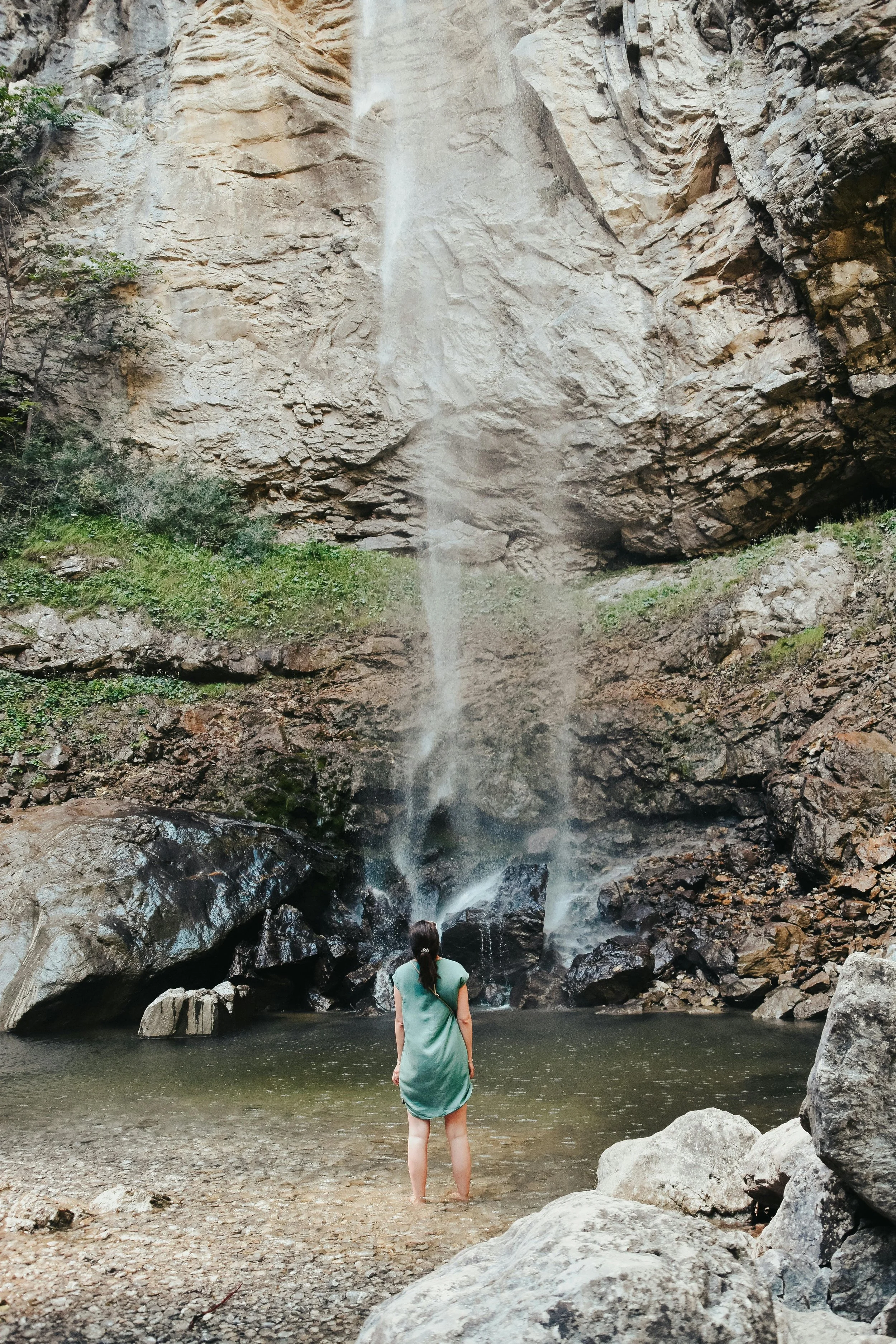
At the beginning of each session, already in hypnosis, Callow asks a simple question: can you describe a beautiful place. The response is strikingly consistent. Everyone goes to nature. No one describes a luxury hotel pool or a perfect, expertly done espresso martini. No one mentions status, wealth, or achievement. What appears instead are beaches, forests, mountains, sky.
This echoes Abraham Maslow’s research on peak experiences in the 1960s. Maslow found that moments of profound joy or insight shared common features across individuals and cultures. They occurred most often in nature. They involved a sense of unity. Perception sharpened, colors intensified and sounds clarified. Time stretched out.
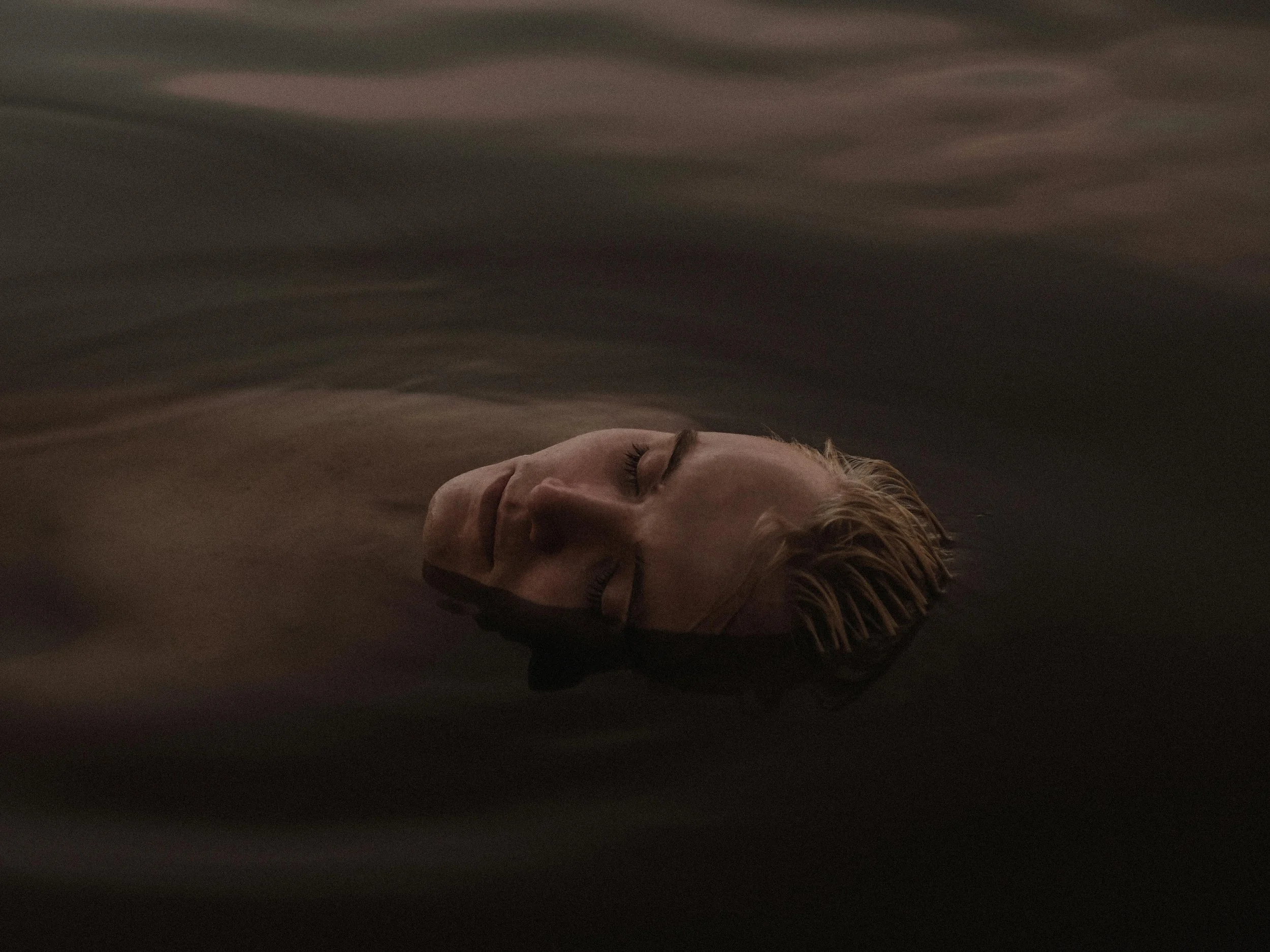
The attention operating in theta states mirrors this precisely. “The water is so still.” “The waves are just gently lapping the shore.” “There’s a seagull resting on the water.” The word just appears repeatedly, marking a way of perceiving things without narrative addition.
People often cry during these descriptions from the intensity of connection itself. Callow describes this as operating from “heart space” rather than mental space. Research from the HeartMath Institute has documented measurable coherence between heart rhythms and brain waves during states of appreciation and gratitude, suggesting that what practitioners describe phenomenologically may have physiological correlates.
Material luxury or human construction disappears entirely. What remains is elemental: water, light, air, earth, living creatures. The aesthetic sense operating here seems to precede cultural conditioning, pointing toward something more fundamental in how consciousness engages with the natural world.
Heart Space and the Disconnected Mind
Modern life systematically obstructs access to this mode of perception. Callow describes the typical office routine: leaving home in darkness, returning in darkness, spending the day under artificial light, detached from weather, seasons, and soundscapes. Lunch breaks have shrunk from an hour to twenty or thirty minutes -insufficient time to recalibrate the senses.
Research increasingly documents the cognitive effects of this arrangement. Prolonged screen exposure fragments attention with a weakened sustained focus. Emotional regulation suffers as well. Nature deficit disorder, while not a formal diagnosis, describes measurable consequences of insufficient contact with natural environments.
Consciousness appears to require certain conditions. Gratitude functions as one access point. Research shows that simple practices, for instance keeping a gratitude journal or naming positive experiences, produce lasting changes in stress response and wellbeing.
But sensory dimension makes a difference. Seeing art online is categorically different from standing before a painting. Texture, scale, and spatial presence alter perception entirely. Museums understand this intuitively, but the implication goes deeper: consciousness requires full sensory engagement.
The Practice of Reconnection
Outside formal hypnosis, access routes multiply. Meditation. Journaling. Automatic writing. Making things. Walking in nature. Time with animals. Reintroducing childhood activities that predate productivity.
Across cultures and disciplines, the names differ, but the phenomenology is similar. Meditation practitioners describe time distortion and heightened perception. Runners report moments when effort dissolves into rhythm. Artists speak of losing themselves in work. The common factor is a loosening of self-monitoring and a reorientation of attention toward direct experience.
These practices resist the contemporary reflex toward optimization. They aim instead toward receptivity and simply toward allowing something to emerge rather than forcing an outcome.
Designing for Consciousness
Can you design spaces for consciousness without making it too “woo-woo”? When I designed for my former fine jewellery brand Atelier Nallik, I worked with semiprecious stones and set them in gold or silver. Back in 2010 when I founded the brand, semi-precious stones were almost always only to be found in esoteric, patchouli-dense shops. I wanted the design to be timeless, high-end yet understated, and bring the healing qualities as a not-so-obvious look into luxury stores. Basically as a Trojan horse - and it worked out with Nallik being placed in department stores like Galeries Lafayette, or the spa boutique at Hong Kong Four Seasons. Today spirituality has had a mass surge everywhere, yet I still feel a lot of it is unnecessary “makeup.”
The absence of luxury imagery in theta states exposes a contradiction in contemporary experience design. The hospitality industry has built itself around status markers - thread count, marble bathrooms, champagne on arrival. Yet how we found out, none of this registers as meaningful per se. Comforting, pleasurable, or relaxing, yes. But what really matters for our soul is light through a window, the sound of water, air against skin.
Theta states require time. They cannot be rushed. They register granular detail: how waves meet the shore, how light moves across water.
Applied practically, this raises different questions: how a room smells, how it sounds, whether windows open, whether weather is allowed in. Whether silence is possible.
Buildings that seal occupants off from seasons and elements sever access to the very states people claim to seek. Courtyards that admit rain and gardens that change, have some bugs even (preferably only ladybugs)? Beyond aesthetic flourishes these are perceptual conditions.
A hotel that fills every hour with activity may succeed operationally while preventing the experience guests say they want. The empty hour is maybe not a gap to be filled, but a prerequisite. The question is no longer whether this matters to design; it is whether design can afford to ignore how consciousness actually works.
words by Jean Linda Balke