Investigating the Unseen and Unkept: Cristine Balarine
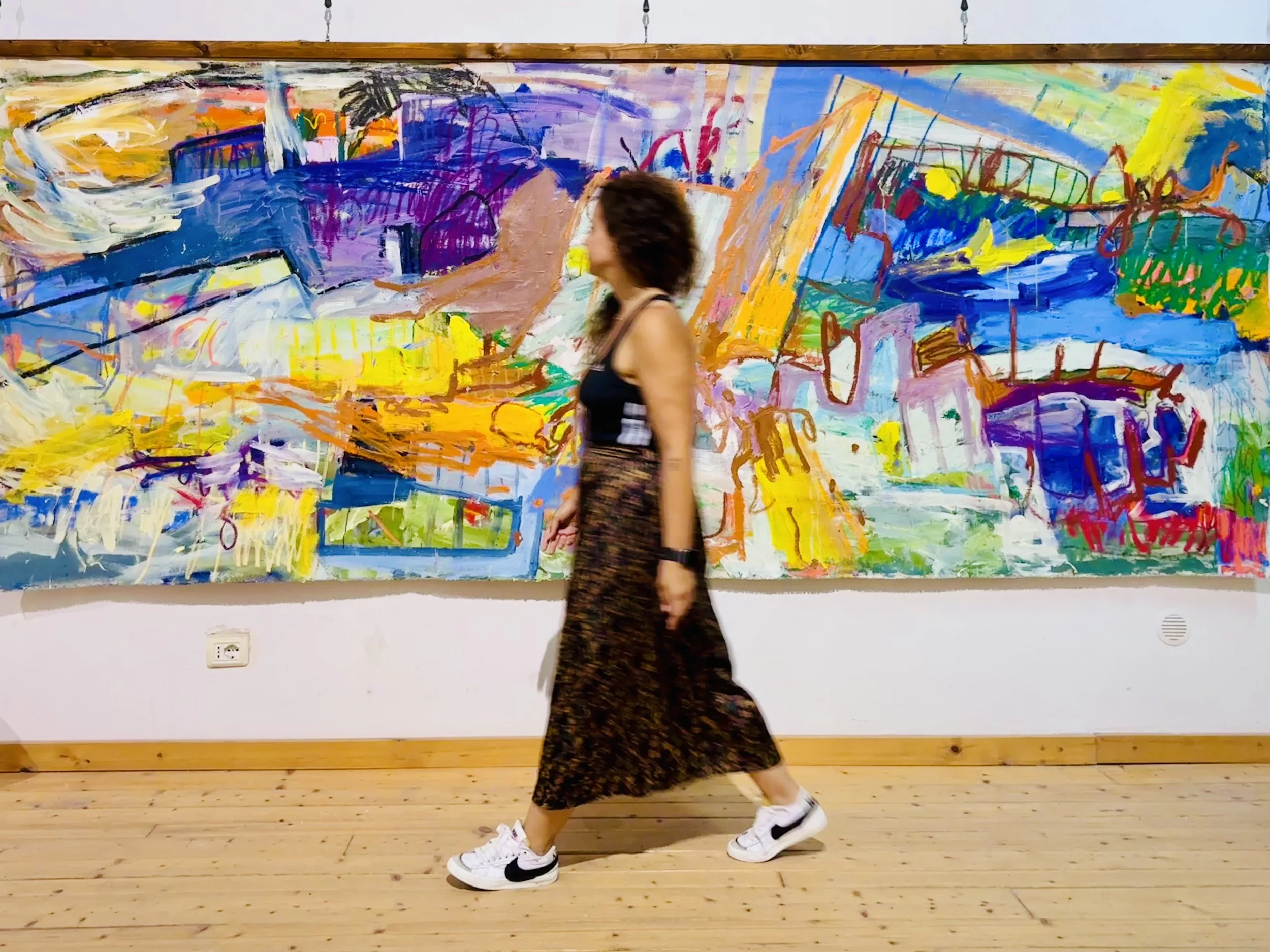
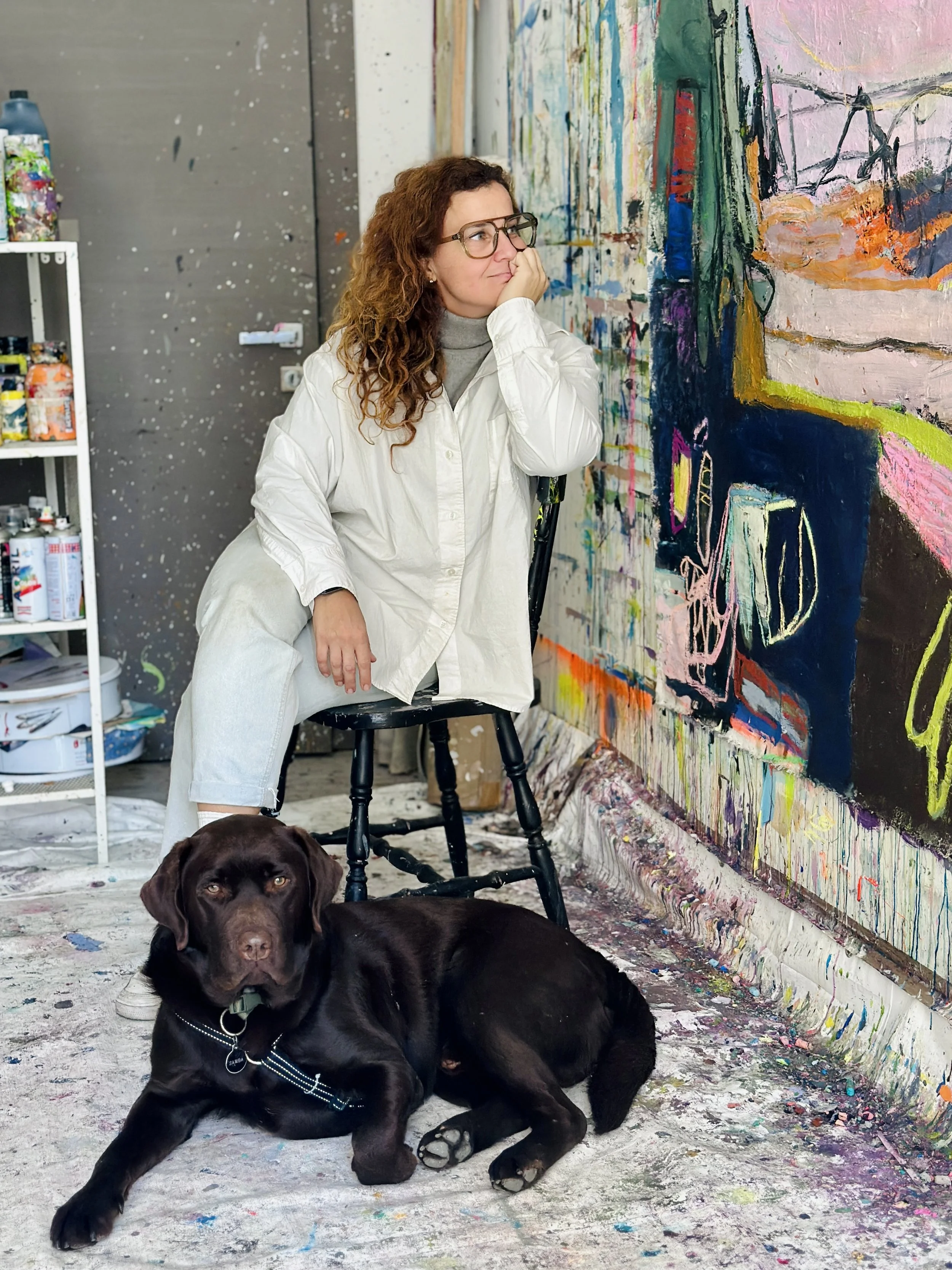
Cristine Balarine's studio on Lipari has gotten too small. The work has outgrown the container, the paintings are multiplying and interacting with one another in ways that demand more physical space than a single room on a volcanic island can offer.
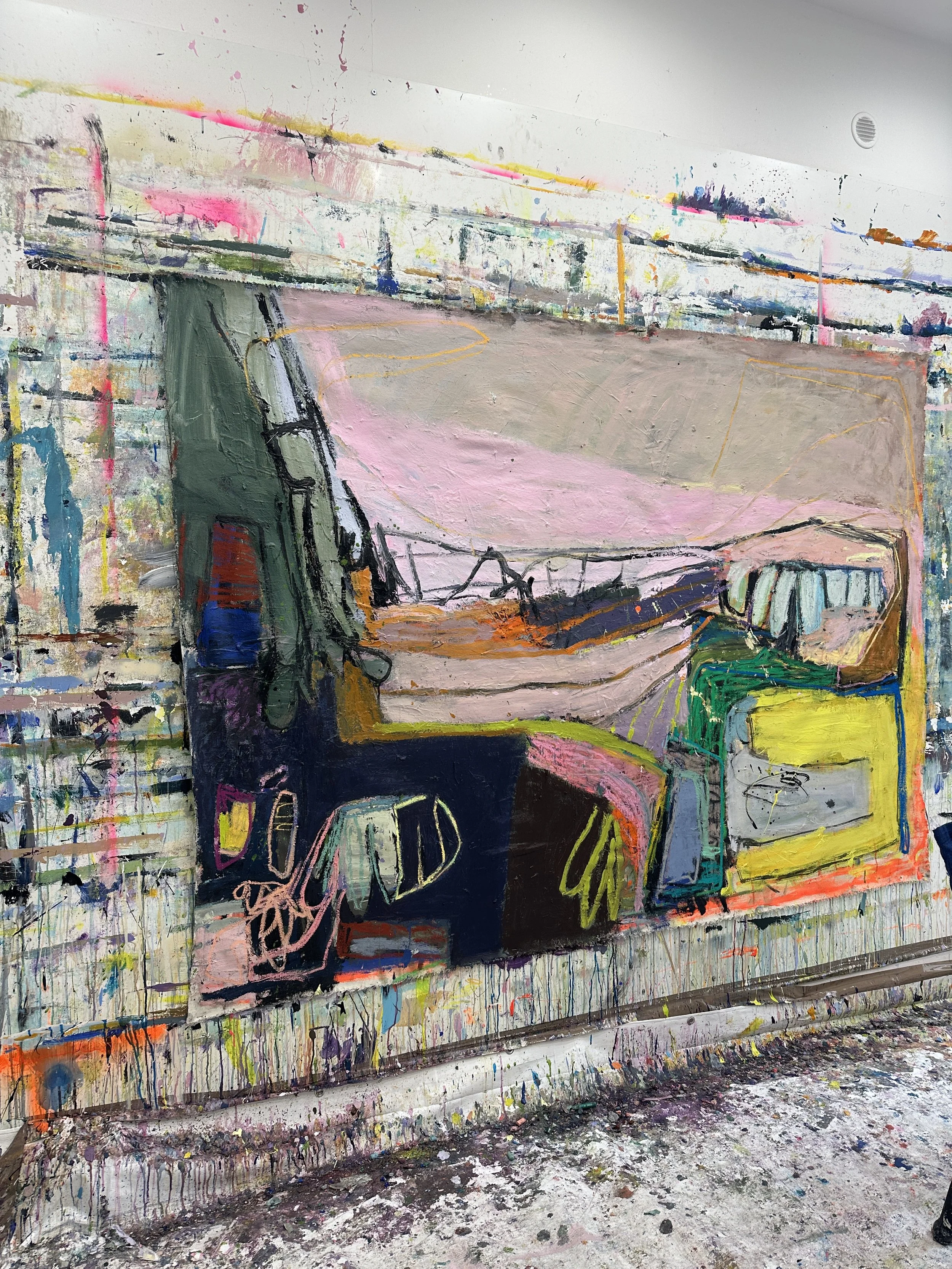
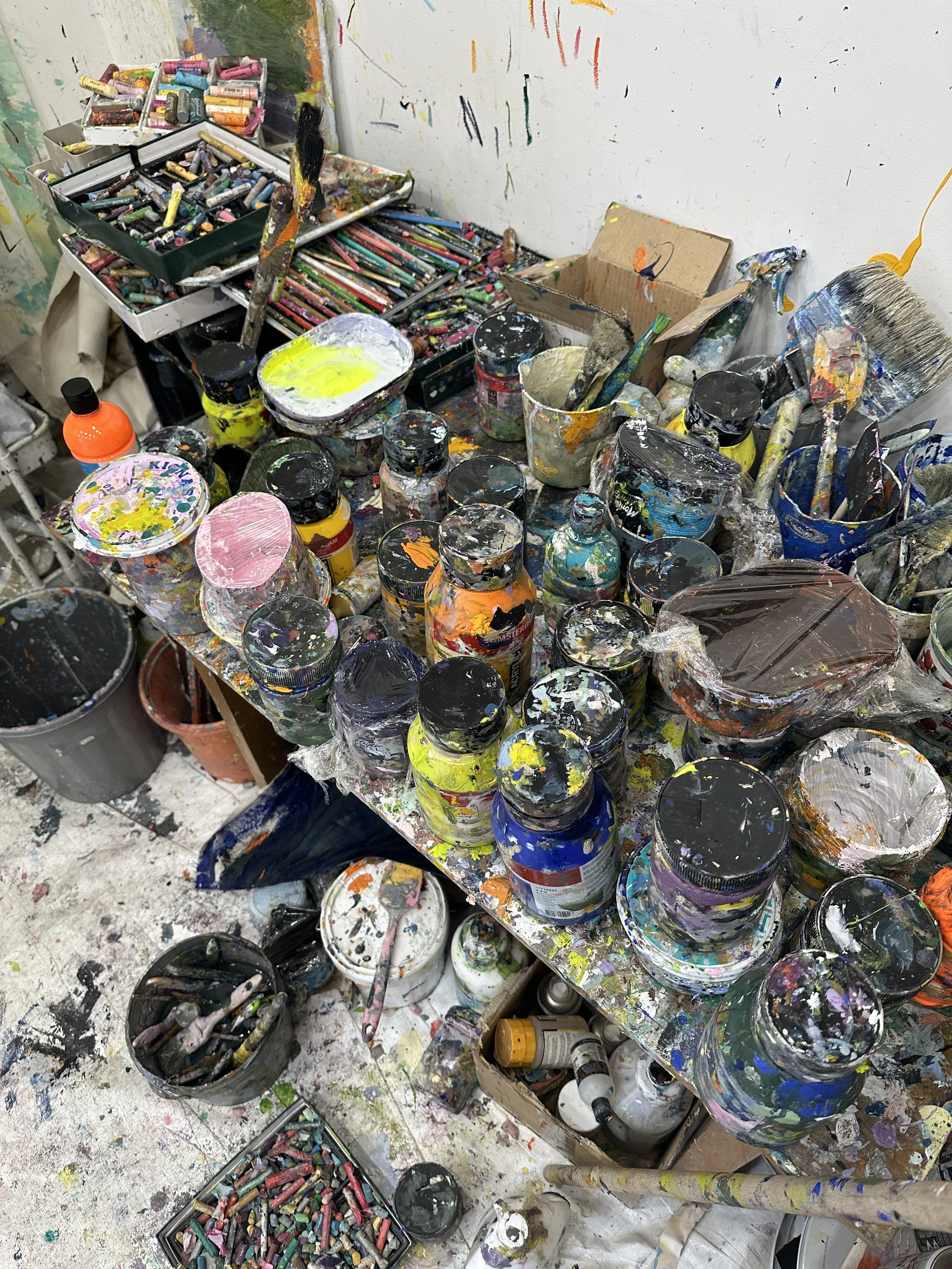
When I visit, there are canvases in various states of becoming, some drying while she battles with others, “gestures” she calls them - not paintings yet, but movements that will eventually feed the paintings. The studio feels less like a workspace and more like an ecosystem mid-process, which turns out to be the right metaphor for almost everything Cristine does.
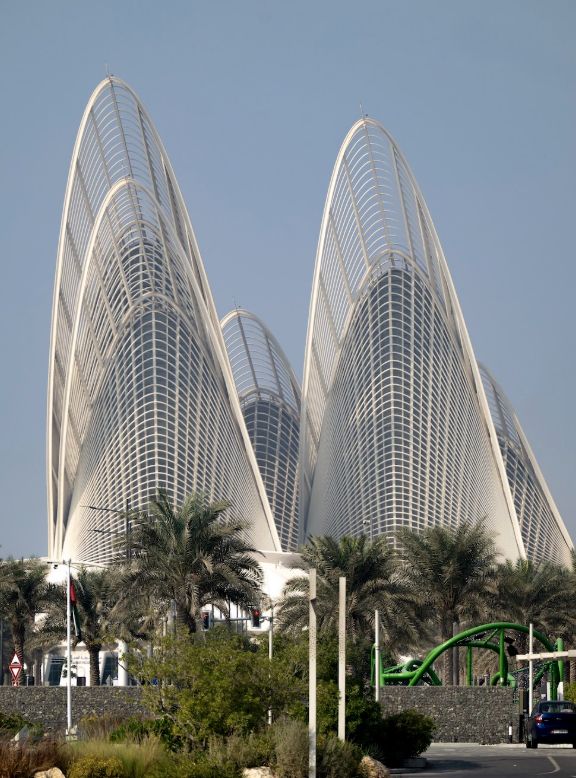
She is Brazilian, Bartlett-trained as an architect, and spent years working on some of the most prestigious cultural projects in the world - including a role as associate architect on Lord Norman Foster's Zayed National Museum in Abu Dhabi. Her work has been shown at Sotheby's in London, the Florence and London Biennales, won first prize at ArtBAM in Munich, and appeared at Saatchi Art's The Other Art Fair.
She now lives in the Aeolian Islands with her family, paints large-scale abstractions on raw canvas and is part of a growing collective that stages interventions in abandoned spaces across Europe. The trajectory from Foster's office to a volcanic archipelago is, as becomes clear over the course of our conversation, a logical consequence of everything she has been thinking about for years.
Painting From the Ugly Side
Cristine works with a Jungian therapist, and the language of shadow runs through her practice with a directness that most artists would probably aestheticise or at least soften. She says frankly she is increasingly interested in painting from her ugly side - the unknown, the parts of the self that sit in shadow not because they are sinister but because no light has been cast on them yet.
The painting, for her, is the casting of that light. It is a way of forcing into visibility the behaviours and impulses and patterns that would otherwise remain dormant, surfacing only at unexpected moments to remind you they were never gone.
One of the canvases in her studio is named after Antropofagia - the Brazilian artistic movement that drew on pre-Columbian indigenous practices of ritual cannibalism, in which consuming an adversary was understood as a way of inheriting their strengths.
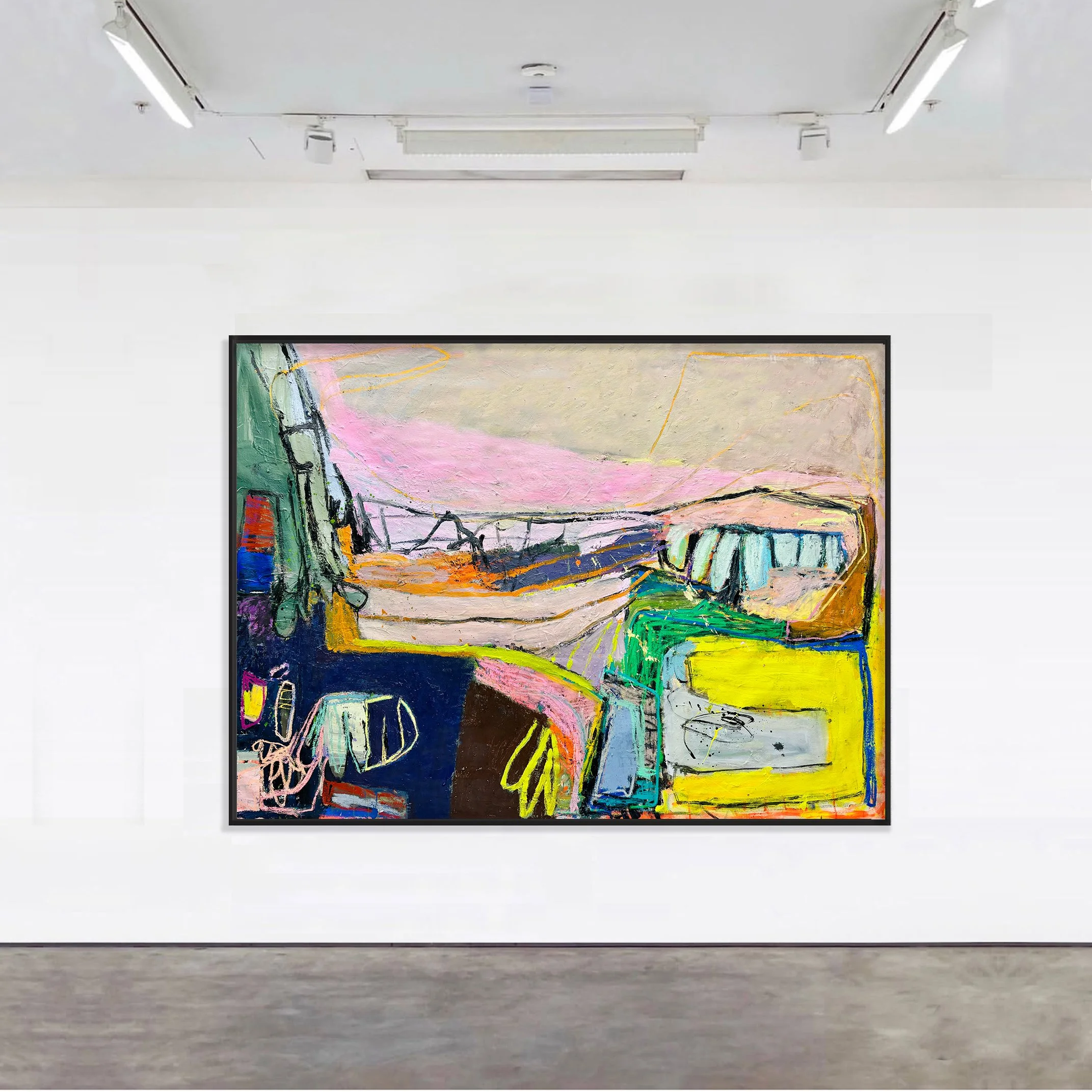
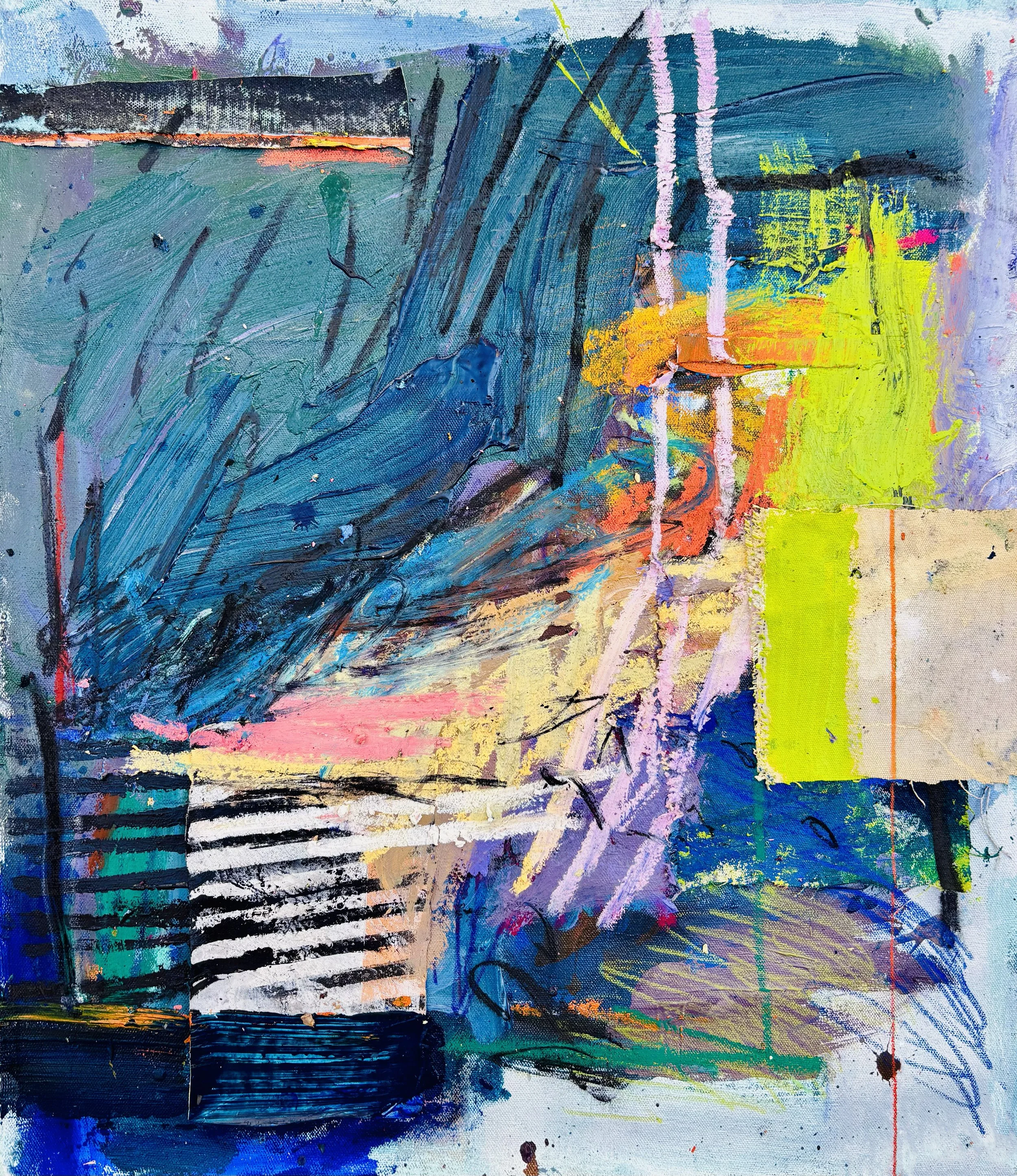
It is, on its surface, a savage image. But Cristine uses it as a framework for what happens inside a painting over time. This particular canvas, she tells me, was full of work she loved - passages of colour, marks, textures she had spent hundreds of euros and hundreds of hours building up. And then she “cannibalised” them. She painted over them, consumed them, let the painting eat itself in order to arrive at a composition that held together as a whole. The material is still there beneath the surface, still part of the thickness and the weight, but no longer visible.
The painting taught her something different from what the one beside it taught her, and that is the point: each canvas is a separate journey, and what you see at the end is only the last of thousands of moments in that journey's life.
This idea that the surface is merely the most recent state of something far deeper and more complex is architectural thinking applied to paint. It is also, whether she frames it this way or not, a profound challenge to the culture of the visible, to the assumption that what you can see is what matters most.
The Volcano as an extension
When Cristine and her family moved to the Aeolian Islands, the decision was driven by a desire to live closer to nature in its most unmediated form. Plus her husband, a successful chef working with Jamie Oliver and Gordon Ramsey, and whom she met living in London is originally from there.
And nature there is volcanic, rough-sea, storm-prone, a landscape of major elements that puts you in your right place, as she says, they just had a devastating storm. The weather dictates everything. If the sun is out, you walk, you rent a boat, you are outside on your bike. If it rains on a weekend, you have nothing to do.
These rhythms build up inside her the same way the layers of paint build up on canvas: accumulations that emerge later in the work without being summoned.
But there is a deeper philosophical framework operating here, one rooted in the indigenous Brazilian perspective that Cristine returns to repeatedly.
In this worldview, the landscape is not a resource and not a backdrop. A river might carry the name of a parent. A mountain might be named after a grandmother. The natural world is understood as part of a family circle participating in a system of kinship that does not distinguish between people and place. It is the opposite of the mechanised thinking that treats everything - land, labour, community, ecology - as something that must have a function, that must serve.
This perspective is what produced one of the most striking works I encounter during the visit: a painting called A Letter to Myself as a Forest. It is, technically, a self-portrait - it is going to the group show Face Off at Vorona Galerie in Berlin, where most of the other works will be conventional portraits of human faces. But Cristine's self-portrait is a landscape. She has positioned herself within the indigenous framework she describes, refusing the assumption that individuality is defined by the shape you take in the material world, insisting instead that her selfhood extends into a bigger picture, into the land and the systems that hold her. It is a quiet, radical gesture: a portrait that refuses to show a face.
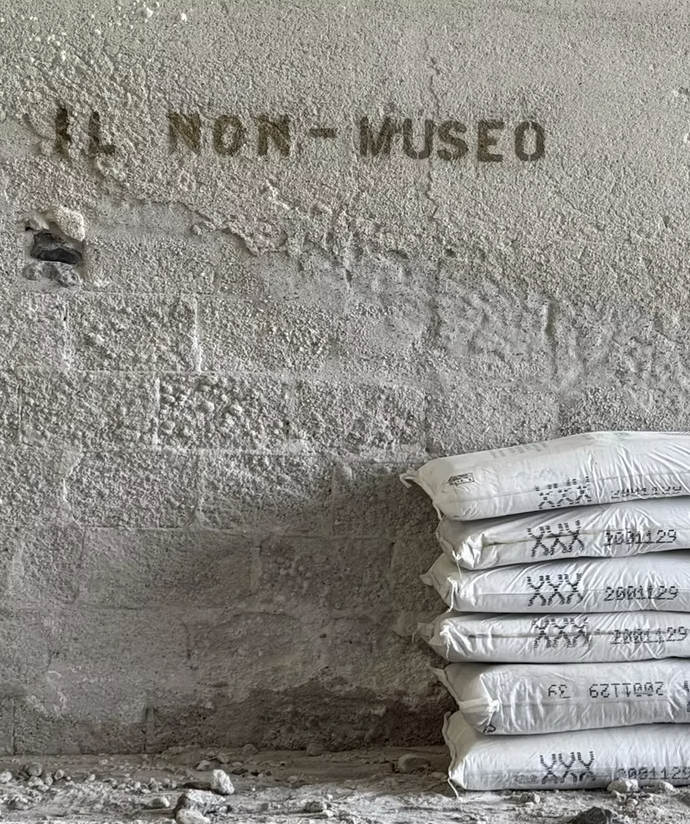
The Non-Museum
On Lipari there is an abandoned factory, and it was in this space that Cristine and the artist Fiona Morrison - who had come from Spain for an informal residency - conceived what they call the Non-Museum. The idea arrived spontaneously, born from the site itself and from a conversation about abandonment in all its forms: abandoned places, abandoned people, abandoned geographies, and the mechanised logic that produces all three.
The Non-Museum is a collective that stages interventions in spaces that have been discarded by the systems that built them. The group is expanding - it now includes artists from America and South Africa, and at the time of our conversation they were preparing an intervention in Barcelona at a former American radio station used during the Cold War, now also abandoned. They will make installations, take photographs, talk about politics and policy. They do not know exactly what it will become, which is, Cristine suggests, the secret of the whole thing.
What makes the Non-Museum interesting from the perspective of how aesthetic decisions get made is the economics of it - or rather, the deliberate absence of economics. Nothing will be kept. Nothing will be sold. The work will be left on site or allowed to disappear. There is no profit motive, no market positioning, no ego negotiation over whose name appears largest. Cristine identifies this selflessness as the reason the collective functions without the internal politics that typically corrode group artistic endeavours. When there is nothing to gain individually, there is nothing to fight over, and the work becomes purely about the act of manifesting something through art in a space that the world has decided no longer matters.
The Thickness of the Paint
What I find remarkable from this conversation is that what is visible is only the most recent layer of a much longer, much messier, much more honest process. The shadow work Cristine does in therapy, the passages buried under the surface of a finished canvas, the volcanic landscape that builds up inside her without permission, the abandoned factory that becomes a site of meaning precisely because it was supposed to be meaningless - all of it operates on the same logic. The interesting thing is never the surface. The interesting thing is the thickness.
This is, I think, what connects Cristine's practice to the questions Archive of Beauty keeps asking.
In an era that optimises relentlessly for the visible - for the scroll-stopping image, the polished render, the frictionless surface - there is something genuinely subversive about an artist who insists that the most important parts of her work are the ones you cannot see, and that the most important parts of a landscape are the ones that have been abandoned, and that the most important parts of a self are the ones still sitting in shadow.
The beauty is in what it took to get there.
words by Jean Linda Balke, photography Jean Linda Balke, Cristine Balarine