An Ocean Address: Coherence at Sea with Anna Nash
What interests me about ocean travel is the way it forces the issue of coherence. A ship is not closed in the literal sense - guests step ashore in different ports every or every other day - but it remains the only constant in an itinerary defined by change.
In a hotel stay, the surrounding city or landscape is relatively stable with the environment being a continuous frame around the property. On a cruise, that frame resets repeatedly: a different port, a different landscape, a different set of cultural signals. Each evening guests return to the same designed environment: the ship becomes the anchor against a constantly shifting backdrop.
This is where coherence matters. If the ship has a clear internal logic, it stabilizes the whole experience. If it does not, the contrast with the changing ports exposes the inconsistencies very quickly.
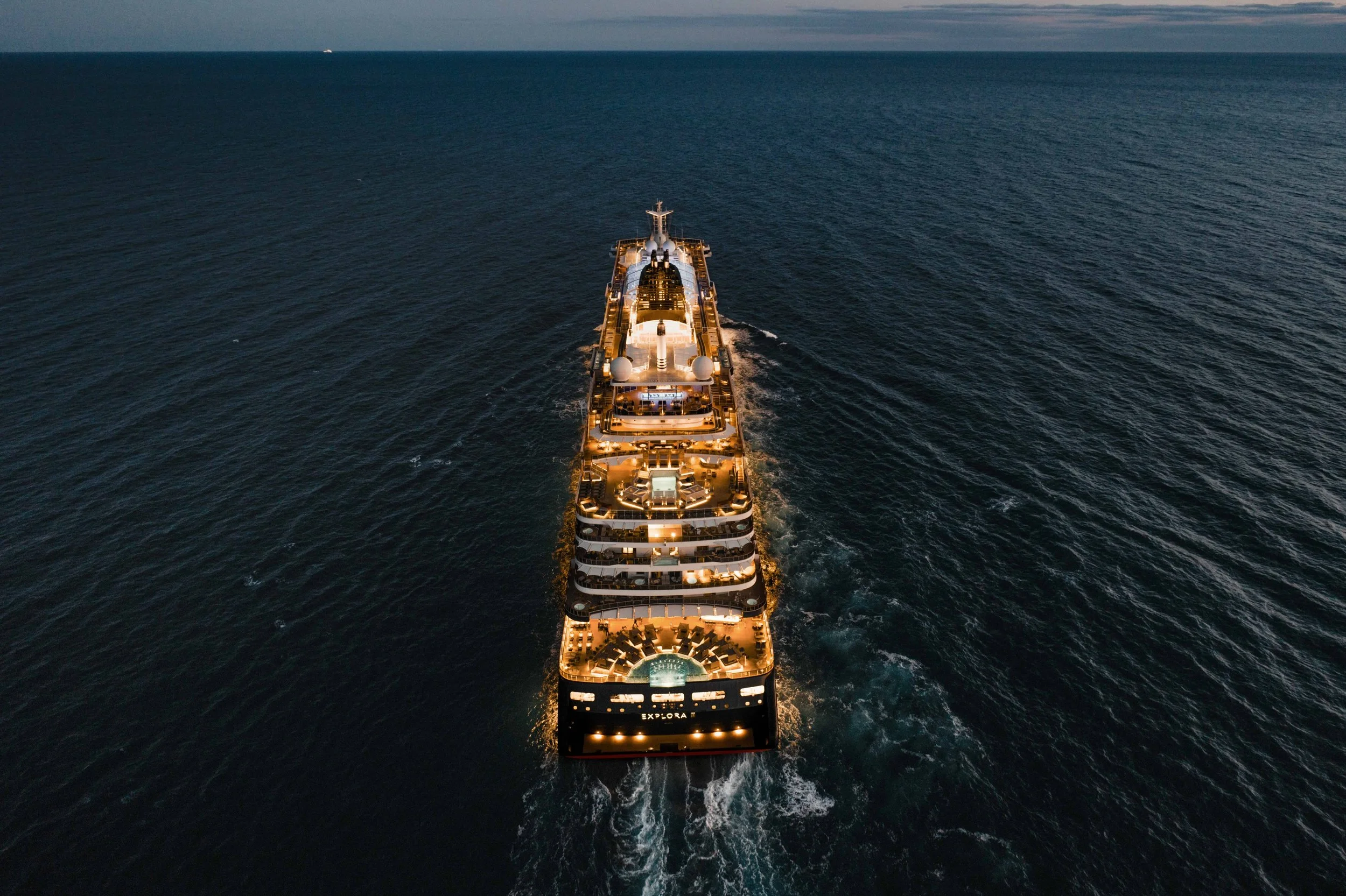
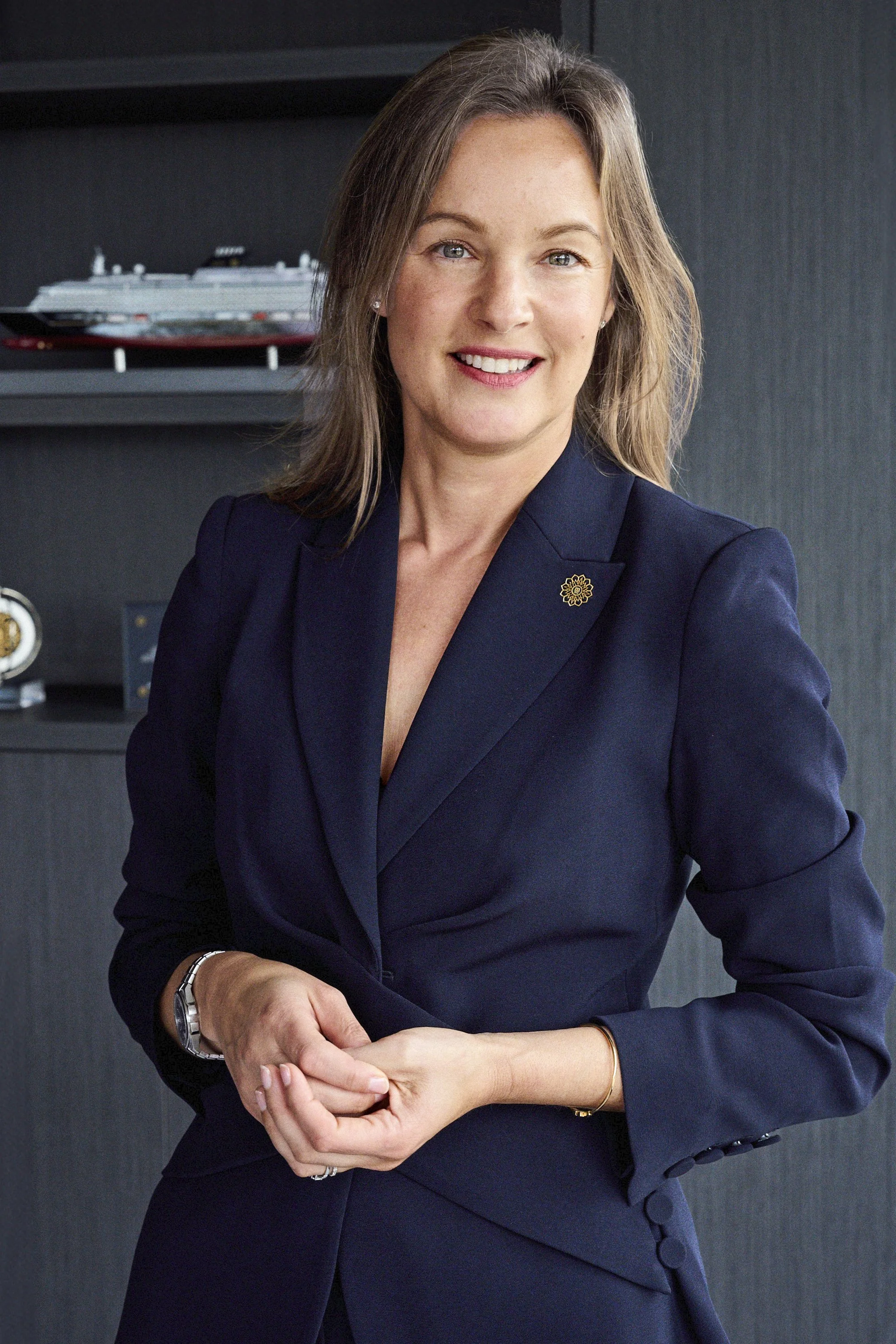
I spoke with Anna Nash, President of Explora Journeys, the ultra-luxury line created by the Aponte-Vago family within MSC's three-hundred-year maritime enterprise. She describes the brand's guiding idea as an Ocean State of Mind, a phrase that becomes tangible when you look at the design and operational decisions that structure the experience.
Explora Journeys entered a category with entrenched legacy codes yet, as Nash puts it, treated it as a blank page. Rather than referencing the cruise industry directly, they focused on what she calls the emotional requirements of the modern guest: freedom rather than scheduling, naturalness rather than ritualised formality, a sense that time is being given back.
That philosophy shows up first in space. Nash calls space "the ultimate expression of freedom," and describes the ships as "homes at sea": spacious, emotionally welcoming environments with a seamless connection between interiors and the ocean. The sea, she insists, is never just a backdrop; it is the core element of the design.
Space, Freedom, and the Horizon
One design choice anchors this idea: every suite has a terrace and a view of the water. Nash sees this as the most significant early decision, because the constant presence of the horizon is what fundamentally separates the ship from a hotel.
"When you see the horizon, you feel free," she says. Sunrises and sunsets bookend the day.
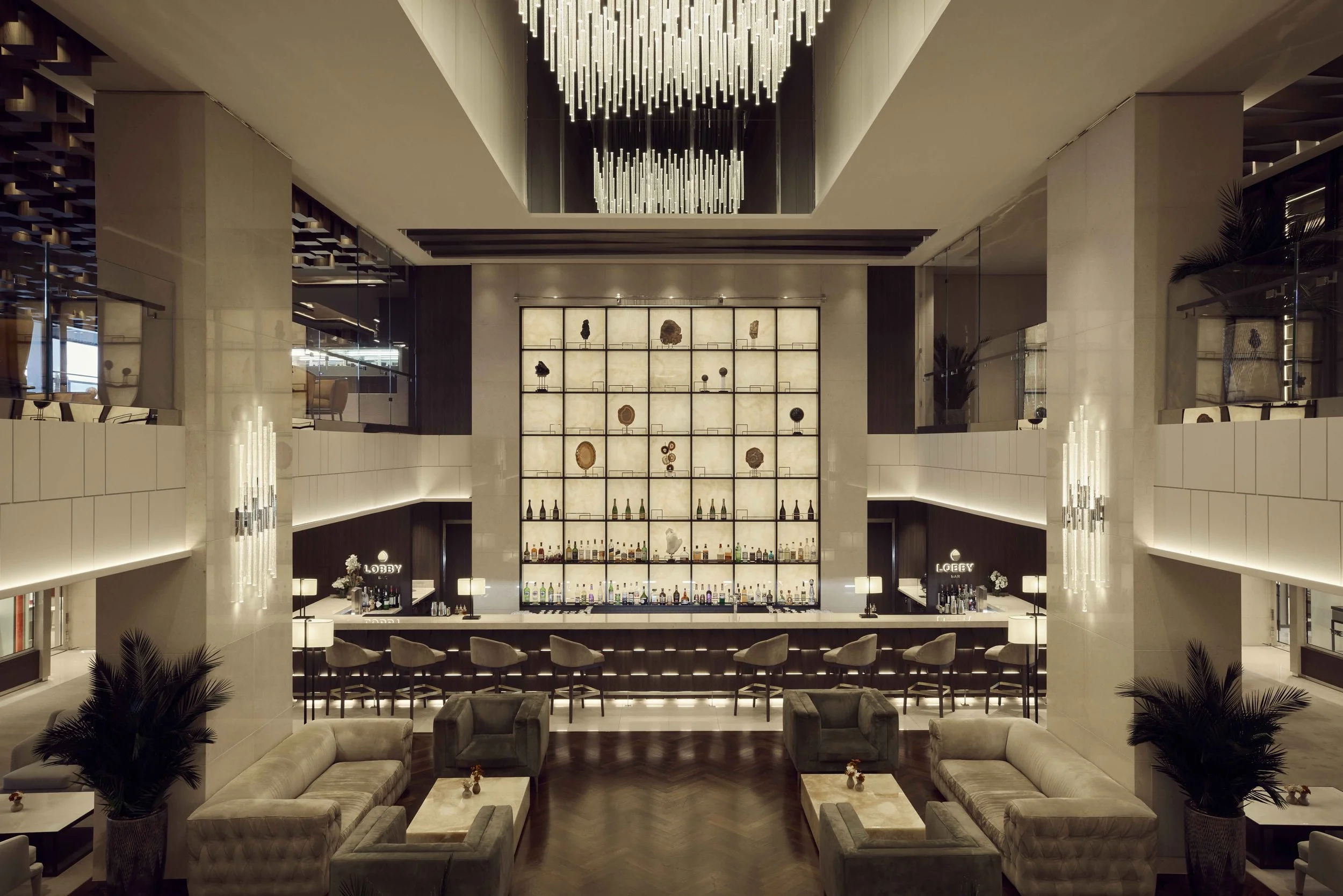
She links this physical setting directly to how people act. In a typical city hotel, guests often hurry through the lobby with their heads down, their attention already split between where they are and where they’re going. It feels transactional. On the ship, she notices the opposite: "The minute people arrive, they slow down." They look up, make eye contact, and actually start conversations.
In a city hotel, the property competes with the street. Other restaurants, other stimuli, the pull of the city itself. On a ship, the experience is uninterrupted. This makes coherence more demanding, not less, because the environment has no outside distractions to hide behind.
Ritual, Rhythm, and Choice
When I asked Nash about rhythm, in the sense of how the sensory pacing of a longer journey is managed, she reframes the idea slightly. A voyage naturally has a cadence, she said, because the ship is moving and each morning begins with the anticipation of a new destination. The core driver, however, is simply choice.
Traditional cruising often relied on rigid structures: fixed dining times, formal dress codes, heavily scheduled programmes. Explora Journeys deliberately moved away from those grid-like systems. The intention was not to remove structure entirely but to create an environment where guests can shape the rhythm of their own day.
This sense of rhythm is vital because the luxury experience often falls apart in the transitions. You might have a room where every material, scent, and light is perfectly aligned, yet the feeling vanishes the moment you step into the hallway. A slamming door, the muffled noise of a reception desk, or a sudden change in lighting can feel like a small interruption, but it’s enough to break the continuity of the moment.
On a ship, the stakes are higher because guests inhabit the same environment for days. Those transitions - from suite to corridor, lobby to restaurant, or deck to spa - are repeated constantly. If the underlying logic isn't consistent, those small gaps in the experience start to add up.
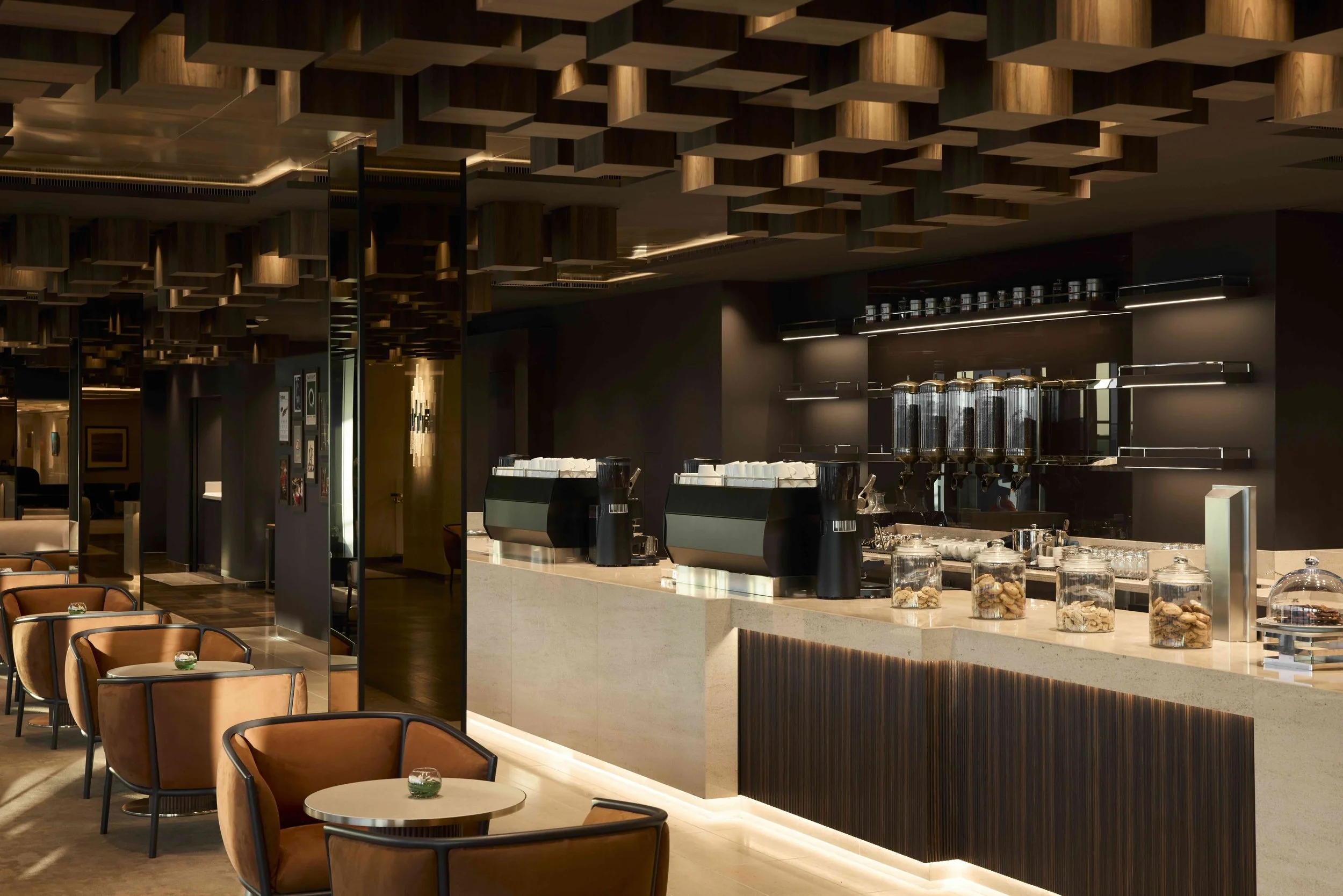
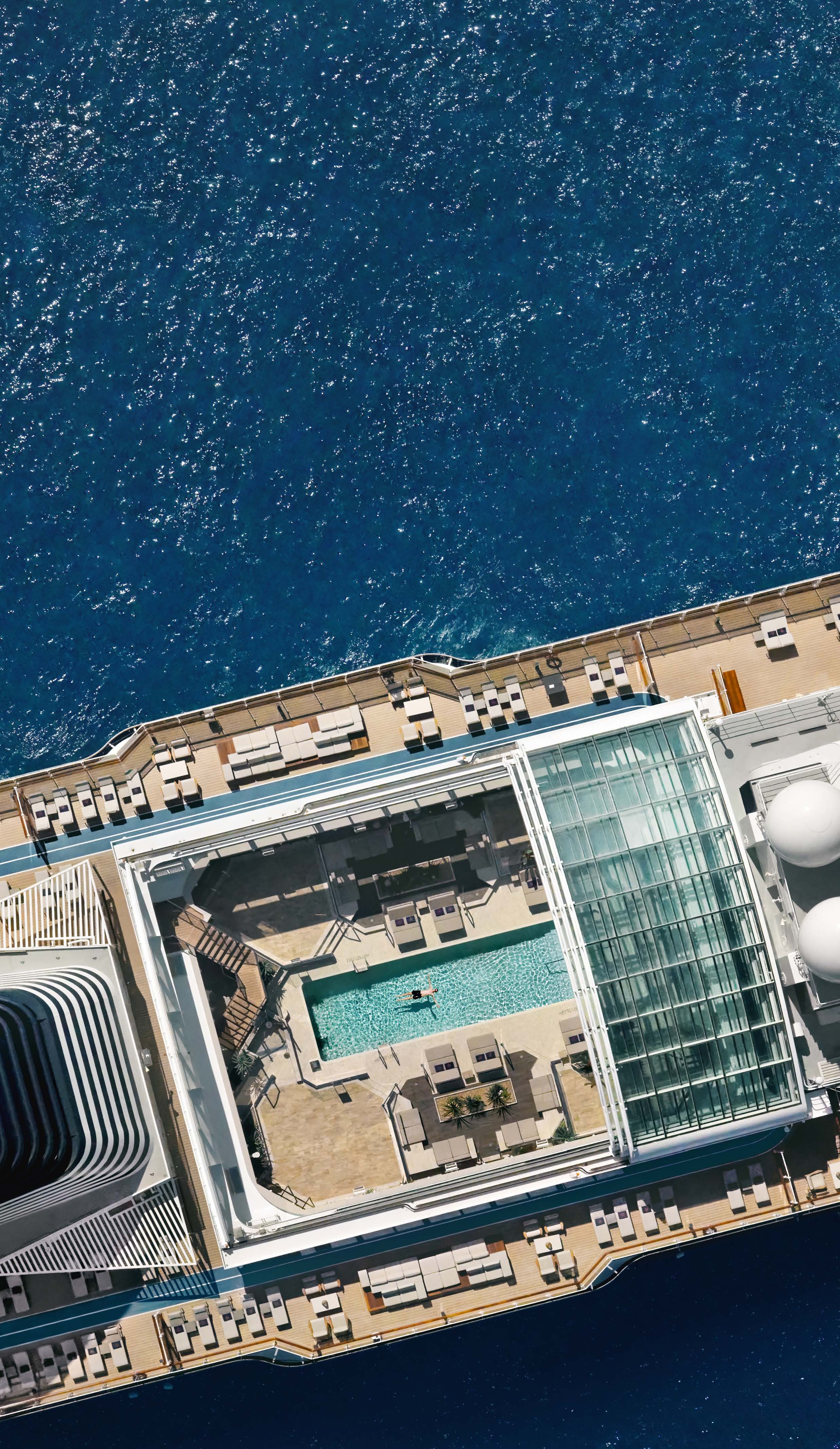
A morning at sea might begin with sunrise yoga on deck or simply coffee on a private terrace watching the coastline appear on the horizon. Emporium Marketplace, the ship's main breakfast space, acts as a social starting point for the day: an elegant food hall with eighteen cooking stations in a room with floor-to-ceiling windows on both sides, pastries made on board, fresh fruit, smoothies, salads and eggs cooked to order. The real aim here isn't just to offer variety but about shifting the entire energy of the room.
Micro-Decisions and Material Calm
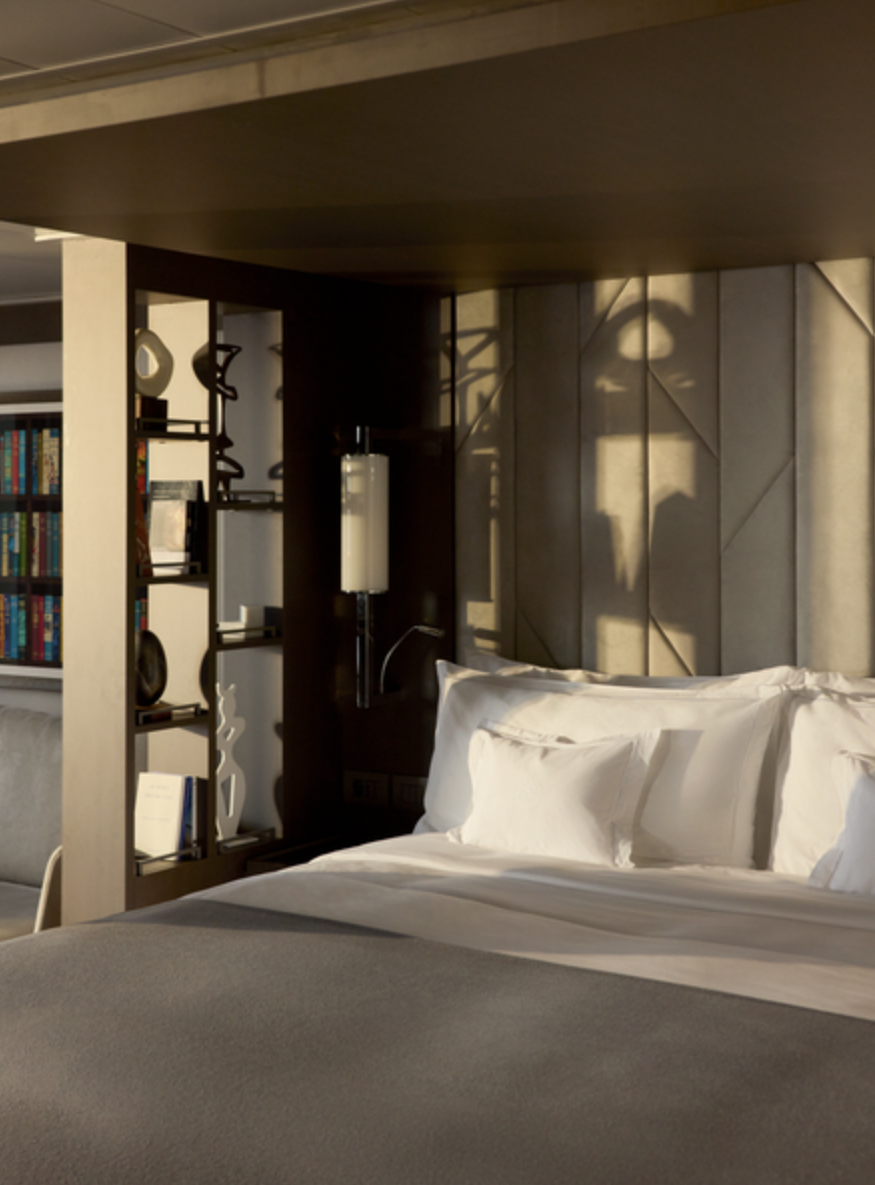
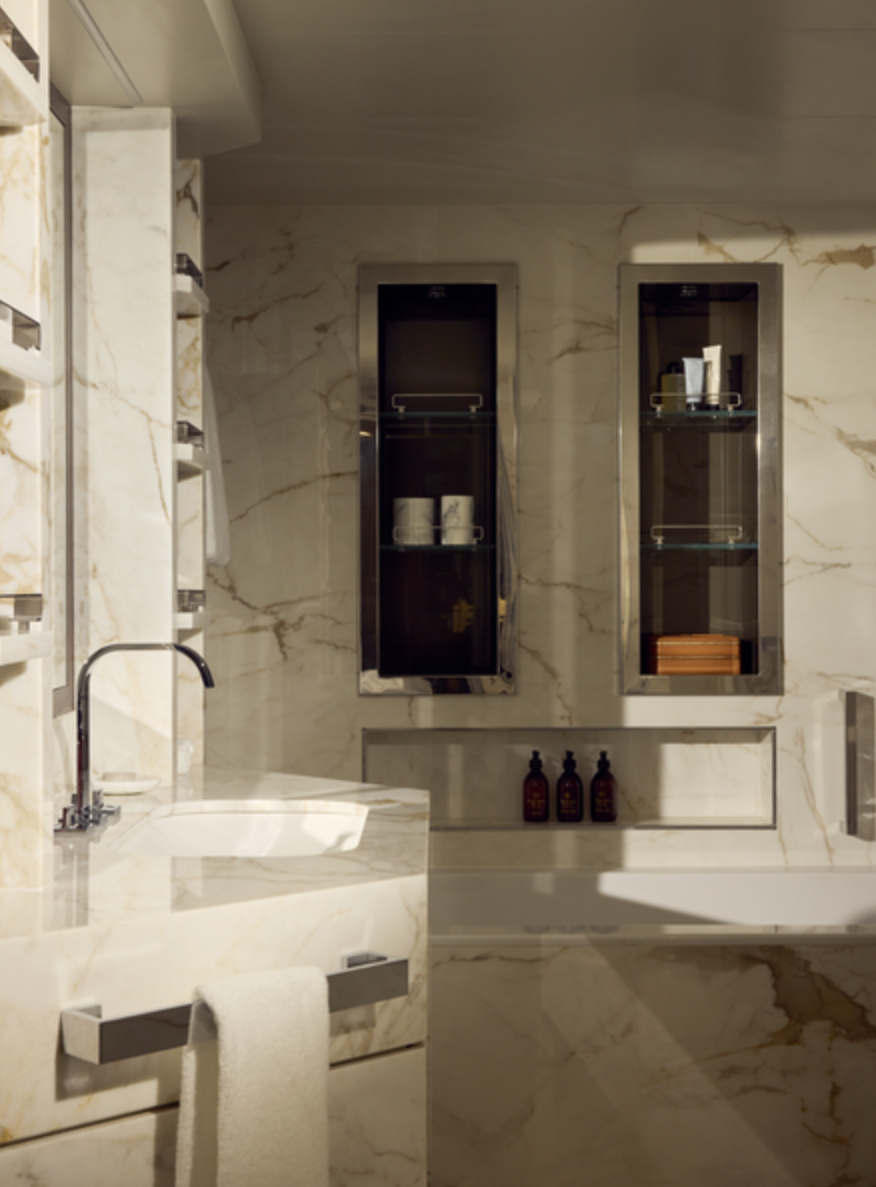
In the suites, Nash describes an automatic floor sensor that triggers a low ambient light when you step out of bed at night: enough to find the bathroom without switching on a full light and disrupting sleep. Charging stations are integrated so you are not fumbling for cables - or worse: stumbling over them - at two in the morning. Floors are heated marble. Linens are chosen with sleep as a priority, because, as she puts it, "there is nothing nicer than the lull of the ship."
These decisions matter because they work at the level where coherence is either upheld or silently undermined. You do not notice a warm floor in the way you notice a chandelier. However, you notice a cold floor immediately. You do not notice a well-placed charging station. You notice the irritation when it is not there. This is where luxury stops being an aesthetic performance and becomes an operational ethic: as reduction of friction.
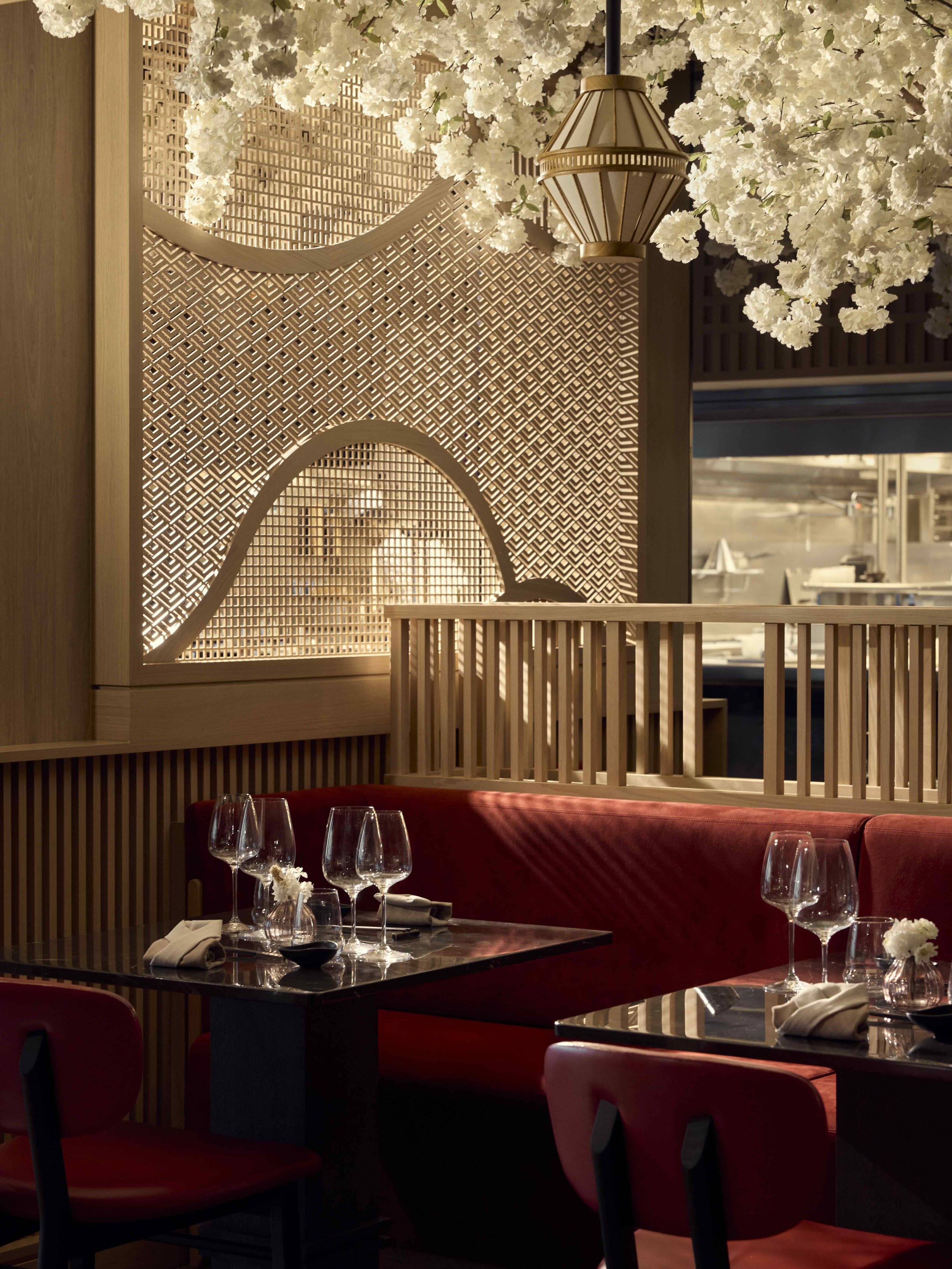
Her favourite restaurant is Sakura, a Pan-Asian space framed by floor-to-ceiling windows on one side and a lattice woodwork ceiling detail that evokes a Japanese tea house. The way she speaks about it is specific and sensory rather than abstract: open kitchen, sushi counter, and design elements that feel built into the architecture.
The System Behind the Calm
The ship, Nash says, functions like a small village.
Logistics, dining, maintenance, and navigation all run at the same time within the very spaces guests live in, leaving a tiny margin for error. When something breaks down on land, it can disappear behind service corridors or city infrastructure. At sea, every operational weakness remains inside the same closed environment.
Wellness also moves beyond the spa. It’s found in sunrise yoga on deck, rowing machines facing the horizon, and a running track that circles the ship. Sound baths have become a favorite, and on the third ship launching this year, they will add the Sava Sound Pod: a system designed for immersive sound and vibration therapy.
Nash describes the typical guest as a professional in their mid-to-late fifties, often at the peak of a demanding career. These are people who find it hard to turn off the "productivity" switch, even on vacation. But the distance from land and the constant sight of the horizon seem to trigger a mental shift, finally giving them permission to ease up.
Slowing down may describe the real product more accurately than marble floors or designer furniture. The physical separation from the world, the rhythm of the sea, and the impossibility of constant connectivity create conditions in which certain travellers finally allow themselves to rest.
Test Of Scale
Explora Journeys is currently approaching a critical stage. A third ship joins the fleet this year, with six planned by 2028. A single ship is a controlled environment. Six ships, moving across different oceans with rotating crews and varied itineraries, multiply every variable in the system. The coherence question therefore becomes structural: can a service culture based on trained instinct survive scaling? Can material quality travel across vessels?
Nash argues that growth is intentional rather than aggressive. The brand remains young enough to adjust quickly and close enough to its founding vision to correct course when needed. Whether that remains true at six ships will be the real test.
There is also a structural advantage: Explora Journeys remains family-owned. Guest feedback is analysed in detail after each sailing, and adjustments can be made quickly. In a publicly listed company, operational changes often move slowly through layers of approval. A privately controlled brand can respond faster, refining the experience voyage by voyage.
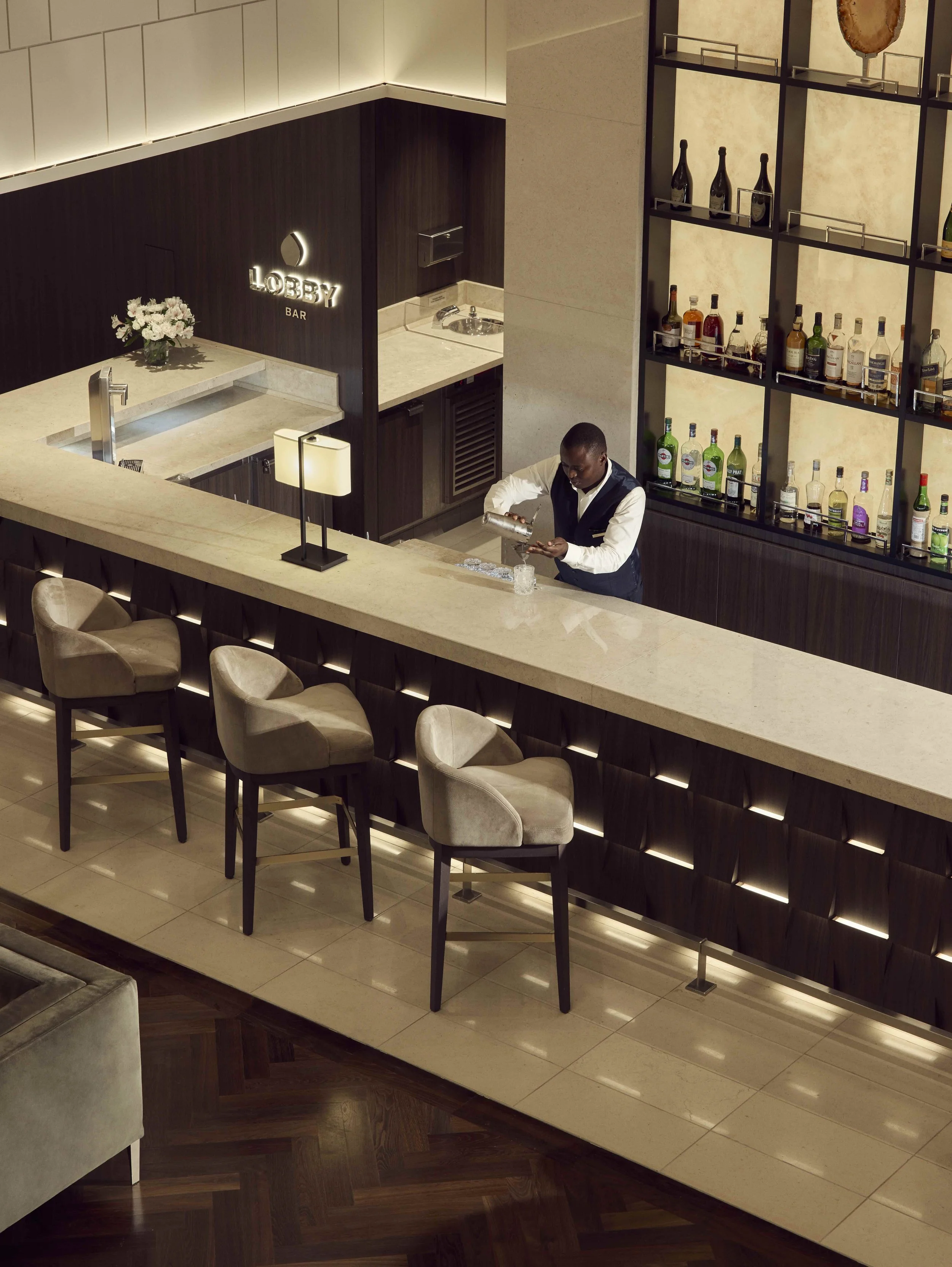
What becomes clear is that the real unit of design in ocean travel is the day itself. From sunrise on the terrace to the final drink in the bar, every transition occurs inside the same continuous environment. Every surface, interaction and spatial sequence either reinforces or erodes the promise being made.
In a closed system, incoherence has nowhere to go.
That is the risk.
It is also the advantage.
words by Jean Linda Balke, photography Explora Journeys